


Wear socks with steel toe boots that pad the toes and heel, wick sweat, and fit snugly so they don't fold under the cap. A height above the boot collar stops rubbing at the shin.
The steel cap doesn't give. Every step, your toes push into it. The sock is the only soft layer between them, so it matters more in safety boots than in any other footwear.
In this guide
- Key takeaways
- The best socks for steel toe boots
- Socks with reinforced toes
- Can you wear regular socks?
- Do steel toe boots need thicker socks?
- Keeping feet dry in steel toe boots
- Steel toe socks for hot weather
- Composite and alloy toe boots
- Stopping toe pain in steel toe boots
- Compression socks with steel toes
- How MASON builds socks for safety boots
- FAQ
Key takeaways
- Padding over the toes matters in steel toe boots, not just under the foot.
- A sock that folds or bunches under the cap rubs every step.
- Medium cushion is a safe start. Go thicker only if the boot has room.
- Steel toes trap heat, so a wicking blend matters.
- Toe pain often comes from boot size or lacing, not just the sock.
What are the best socks to wear with steel toe boots?
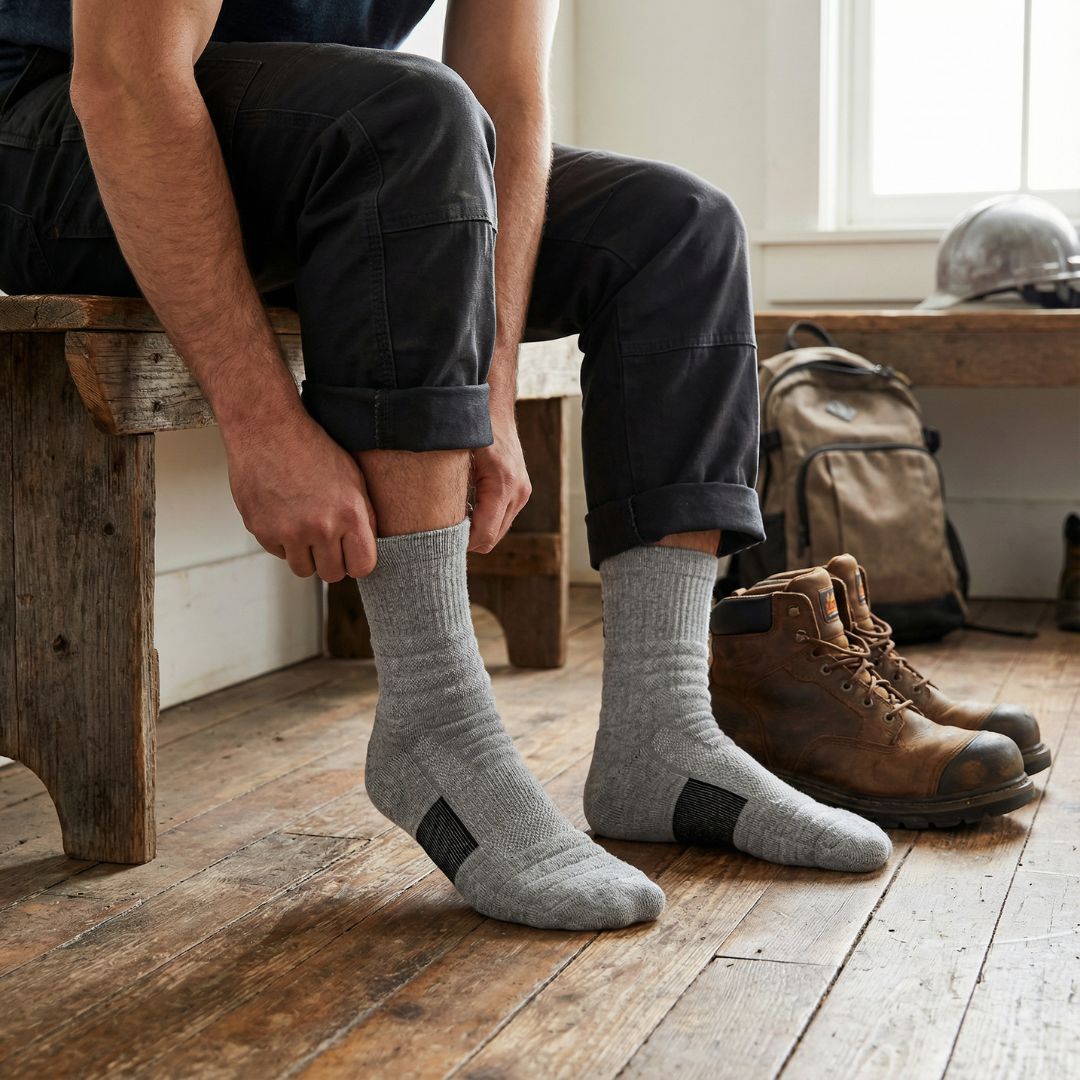
The best socks to wear with steel toe boots have cushion over and under the toes, a padded heel, a wicking blend and a snug arch band. They should reach above the boot collar, so the boot never rubs bare skin.
- Toe padding: cushion where the toes meet the cap.
- Heel and forefoot cushion: padding where you hit the ground.
- Wicking blend: bamboo-derived fibers, merino wool or synthetics with nylon.
- Snug fit: sized by shoe size, with an arch band so nothing folds under the cap.
- Height: crew or boot height, above the boot collar.
What are the best socks with reinforced toes?
The best socks with reinforced toes add extra yarn at the toe box, so the sock survives the cap and the toes get a little more padding. In steel toe boots, the front of the sock takes the most rubbing, and that's where cheap socks blow out first.
Keep toenails trimmed, too. Long nails wear through the toe of any sock, reinforced or not. For more on what makes a sock last, see the guide to the best heavy duty work socks.
Can you wear regular socks with steel toe boots?
You can wear regular socks with steel toe boots, but thin everyday socks leave the toes rubbing on the cap and often slide down on a long shift. A work sock with toe padding and an arch band makes a real difference by the end of the day.
Whether steel toes truly need special socks is its own question. The guide do steel toe boots require special socks answers it in detail.
Do steel toe boots need thicker socks?
Steel toe boots need socks thick enough to cushion the toes against the cap, but not so thick that the toes press into it. Medium cushion is a safe start. Adjust by how the boot fits at the front.
- Toes touching the cap: go thinner, or check the boot size.
- Foot sliding forward: a cushioned sock can fill the gap.
- Cold sites: heavier socks work only if the boot still has room.
The guide to thick cushioned work socks covers cushion levels.
How do you keep feet dry in steel toe boots?
Feet stay drier in steel toe boots with a wicking sock, a mid-shift change on hot days, and boots that dry fully overnight. The cap traps heat at the front of the foot, so sweat builds up fast. For a full routine, see the guide to the best work socks for sweaty feet.
What socks work in steel toe boots in hot weather?
In hot weather, the best socks for steel toe boots are mid-weight wicking blends with mesh over the top of the foot and padding only at the toes, heel and ball of the foot. The cap holds heat at the front of the boot, so a heavy sock all over makes it worse.
Change into a dry pair at lunch on very hot days. The guide to summer work socks that don't trap heat has more.
Do composite or alloy toe boots need different socks?
Composite and alloy toe boots need the same kind of sock as steel toes: padding at the toes, a snug fit and a wicking blend. Composite caps don't conduct cold the way steel can, so they can feel warmer in winter. The sock advice stays the same.
What changes from boot to boot is the room at the front. Always try a new pair on with your work socks.
How do you stop toe pain in steel toe boots?
Toe pain in steel toe boots usually stops when the boot is the right size, the laces hold the heel back, and the sock pads the toes without crowding them. The sock can only do part of the job.
- Check the boot length. Your toes shouldn't touch the cap when you stand.
- Lace snugly over the instep so your foot doesn't slide forward.
- Trim toenails short and straight.
- Replace insoles when they flatten, so your foot sits in the right place.
If toe pain or numbness continues, see a podiatrist or doctor.
Should you wear compression socks with steel toe boots?
Compression socks can be worn with steel toe boots, but they solve a different problem: leg swelling, not toe comfort. Many compression socks have little padding at the toes. If you need compression, ask a doctor which level suits you, and check the toe fit in your boots.
How does MASON build socks for safety boots?
MASON makes work socks for people in safety boots all shift. Every pair has:
- Cloud Cushioning under the heel and ball of the foot
- A Reinforced Heel Cup and a reinforced toe
- An Arch Strap that stops the sock folding under the cap
- Mesh Ventilation over the top of the foot
Pick Tradesman Socks for most safety boots and shoes, or Tradesman Boot Socks for tall steel toe boots. Sizes fit US men's 6 to 15 and US women's 7 to 13, so women can size by shoe size, not a guess. Every order comes with a 99-day money-back guarantee, and a lifetime warranty after that. You can compare every pair in the bamboo work socks collection.
"The extra cushions to the socks are a great perk and helps with more comfort wearing safety toe shoes." Michael M., customer review
Checklist: socks for steel toe boots
- Padding over and under the toes
- Cushion at the heel and ball of the foot
- A wicking blend, not cotton
- An arch band that stops folding
- Crew or boot height, above the collar
- Room in the boot with the sock on
FAQ
Do podiatrists recommend special socks for steel toe boots?
Podiatrists generally recommend socks that fit well, wick moisture and cushion pressure points. For steel toe boots, that means padding at the toes and a snug fit.
Are wool socks good for steel toe boots?
Wool socks work well in steel toe boots, especially merino blended with nylon. Some people find wool warm in summer, so a bamboo or synthetic blend is an option.
Do women need different socks for steel toe boots?
Women don't need a different kind of sock for steel toe boots. They need the right size, so the heel and arch band sit in the right place.
How often should you replace socks for steel toe boots?
Replace socks for steel toe boots when the toe or heel wears thin or the cushion feels flat. Rotating pairs makes each one last longer.
Want more work sock guides like this in your Google results? Add masonclothing.com as a preferred source.
Next, see the guide to the best winter work socks.
