


Most carpenters spend weeks picking out their nail gun. Then grab whatever belt was on the peg at the hardware store. A bad work belt for tool pouches turns a 10-hour shift into a back problem. The right one disappears on you — tools are just there when you reach for them, belt sitting flat all day, buckle opening in one move at lunch.
Here's what actually separates a job-site belt from a waste of money.
Why the Belt Matters More Than the Pouch
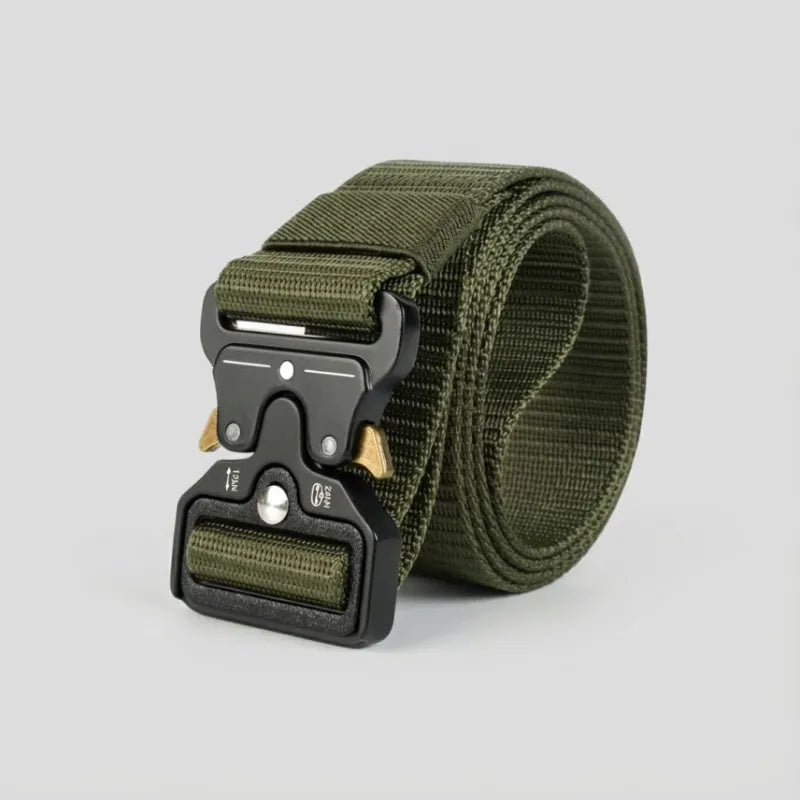
Most guys focus on the tool pouch. Makes sense — that's where the tools live. But the pouch only works as well as the belt holding it up.
A belt that slips means you're reaching further for your hammer than you should be. A belt that's stiff in the wrong places puts torque on your hips when you're bent over framing. A belt that's hard to unclip costs you 30 seconds every time you squeeze through a tight space or grab lunch.
Over 10 hours, that stuff stacks up. Real fatigue, real risk. The best work belt for tool pouches on a construction site does three things: stays exactly where you set it, releases fast when you need it off, and handles loaded pouches without twisting or pulling down on one side. Most belts manage two of those. That third one is where things usually fall apart.
Work Belt: What to Actually Look For
If you work in construction, here are the features your work belt should have:
Width and load distribution
A wider strap spreads the weight of your pouches across more surface area. For a carpenter carrying a framing hammer, tape measure, speed square, utility knife, and pencils — that's 8 to 10 lbs before you've pulled a single nail. Look for at least 1.5 inches of strap width.
Nylon holds its shape better than leather under sustained load. Leather looks sharp on day one, then stretches, stiffens in cold weather, and eventually gives out in ways that are hard to predict. A quality nylon strap stays level after months of daily use.
Buckle mechanism
This is where most construction belts quietly fail. Holes-and-prong buckles are the default. They work fine until the holes stretch, or you're wearing gloves and can't line up the pin, or you've adjusted your waist three times in the same day and the right hole no longer exists. Ratchet belts improve on this — but the clamp wears out, and every trim to fix the clamp makes the belt shorter over time.
The best option for tradesmen is a quick-release stepless buckle — usually military-style. You set the length once, it locks without holes, and opens with one push even in gloves. For carpenters who put their belt on and take it off multiple times a day, this stops being a small thing pretty fast.
Check out this guide too: How to Pick the Best Work Pants: A Field-Tested Guide by Job Type
Adjustability without preset notches
Your waist changes through the day — tool belt on, layers off, layered up for cold mornings. A belt with continuous adjustment handles this without you thinking about it. One with six preset holes doesn't.
D-rings and suspender compatibility
If you're running heavy-duty pouches, you'll eventually want suspenders. Make sure your belt has the structure to support them.
Two Mason Belts Built for This
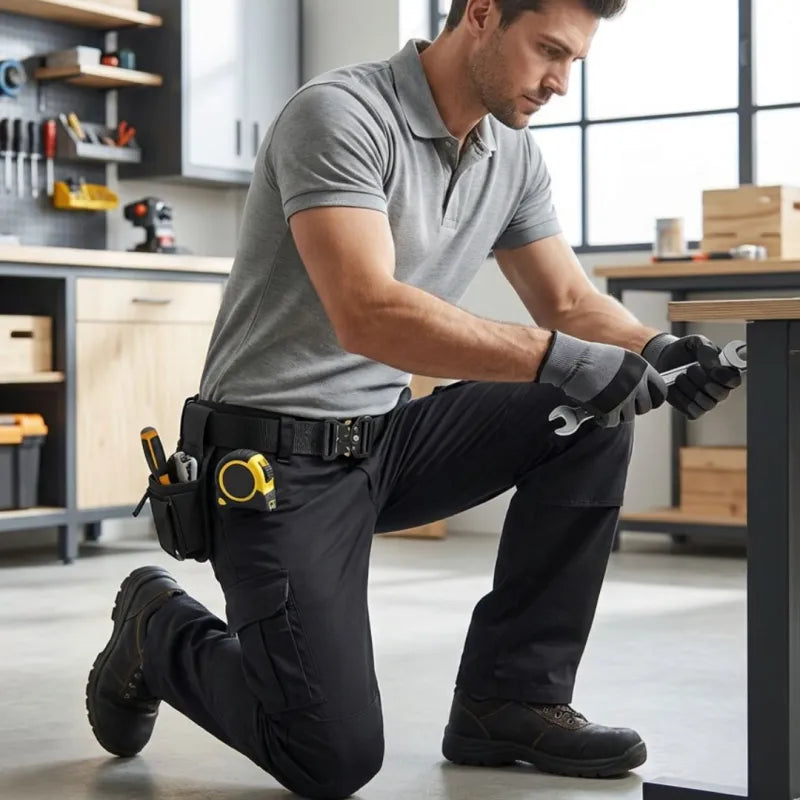
Mason makes two belts worth looking at if you work as a carpenter or on a construction site and use a work belt for tool pouches every day.
1. Mason Adjustable Fabric Work Belt
Wide, breathable strap with full adjustability across a big waist range. It sits flat against your pants and stays there — which matters when you've got a pouch hanging off each side and you're bent under a deck frame for 20 minutes. This is the belt for carpenters who want to load it up and stop thinking about it.
2. Mason TACTIC Pro Quick Release Work Belt
Military-style buckle, stainless steel and aluminum alloy, one push to open, one click to lock. No holes, no ratchet mechanism to wear out, no guessing. The nylon strap handles up to 1.2 tons of pulling force — which isn't a number you'll ever push on a job site, but it tells you the hardware won't flex or slowly deform under the weight of loaded tool pouches over months.
Continuous adjustment fits waists up to 50 inches. Available in black, navy, army green, khaki, grey, and a few others. Verified buyers rate it 4.6 out of 5. Most mention the buckle specifically — how it opens in one move with gloves on, how it doesn't pop loose during the day.
Setting Up a Carpenter's Tool Belt the Right Way
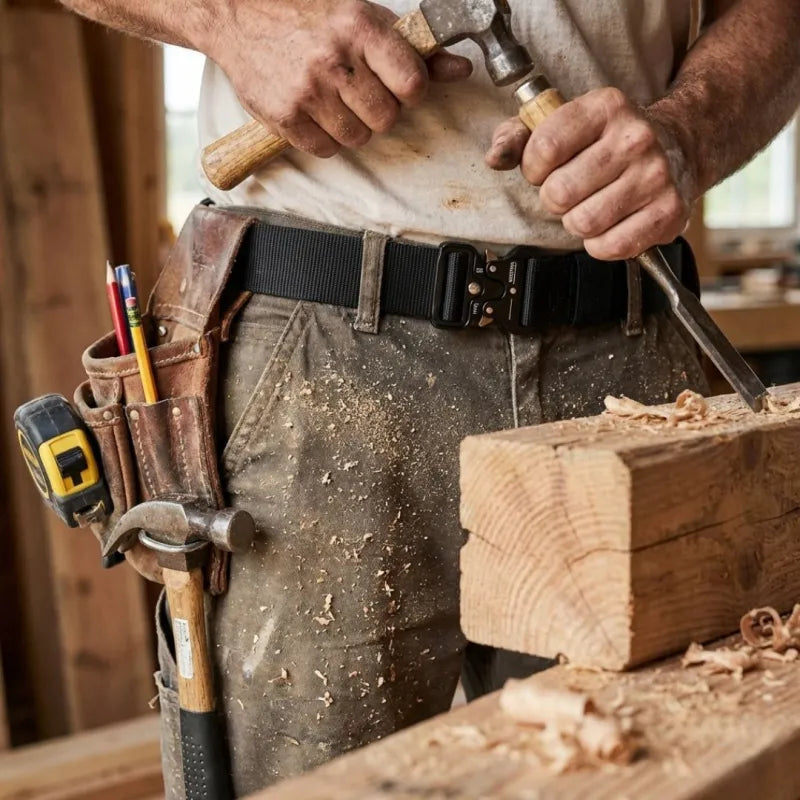
Even a good belt fails if it's set up wrong. A few things that make a real difference:
1. Start with the belt position. Put the belt on over your work pants with nothing attached. Adjust it to sit at your natural waist — not your hips. Hip-riding carpenter's tool belts tilt forward once the pouches load up.
2. Attach your dominant side first. Main pouch — hammer holder or general pouch — goes on your dominant side. Test the reach before adding anything else. Your elbow should be bent slightly when your hand lands on your most-used tool.
3. Distribute the weight. Every pound on one side needs something on the other to balance it. Tape measure, utility knife, pencil holder — spread these across both sides. An unbalanced work belt for tool pouches causes hip tilt that builds into real pain over a long shift. [LIEN : article on how to prevent back pain with a tool belt]
4. Add suspenders if you're going heavy. If your fully loaded belt hits 12 lbs or more, suspenders stop being optional. Both Mason belts have strap structure that supports the attachment.
5. Test the buckle with gloves on before day one. Fifteen seconds of practice saves a lot of frustration on a cold morning.
Check out this guide too: Why Do Work Boots Hurt My Feet? 6 Real Causes and How to Fix
Mistakes That Show Up Constantly on Job Sites
Belt too loose. Comfortable at the start. By hour four, the pouches have shifted forward and you're reaching across your body every time you go for a pencil. Tighten it one notch more than feels natural.
Everything on one side. Framing hammer plus big pouch plus speed square holder — all on the right — is a chiropractor visit in slow motion. Load both sides.
A fashion belt on a job site. Under 1.2 inches of strap width, decorative metal buckle — these aren't designed for sustained weight. They wear out fast and leave pressure marks on your hips.
Ignoring the buckle under pressure. If you can't get your belt off with gloves in ten seconds, that's worth fixing before you're in a situation where it actually matters.
Bottom Line
A solid work belt for tool pouches in carpentry needs to be wide, steplessly adjustable, built from nylon or reinforced fabric, and buckle in a way that lets you in and out fast.
Most belts on the market hit three of those four. The Mason TACTIC Pro hits all of them. At $29.90 with a lifetime warranty and a 99-day trial, the math on testing it is pretty simple. Explore Mason Work Belts.
