


According to data from EU-OSHA, lower limb injuries are among the most frequent accidents in construction, industrial, and logistics sectors. In many cases, inadequate protective footwear is a contributing factor. This is exactly where the Work boots vs work shoes debate becomes critical.
Many professionals hesitate between lighter low-cut work shoes and more protective high-cut boots. However, this decision should never be based on style or immediate comfort alone. It must rely on objective criteria: level of risk exposure, working hours, climate conditions, regulatory requirements, and physical demands of the job.
In this expert guide, we will break down the fundamental differences, examine their respective advantages, and most importantly, determine which work boots are best suited to your work.
Work Boots vs Work Shoes: What You Need to Know
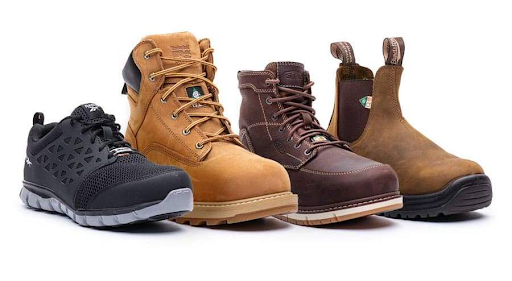
In the Work boots vs work shoes debate, everything starts with a clear definition.
A work boot is a high-cut safety footwear designed to provide reinforced protection. Its elevated upper supports the ankle, significantly reducing the risk of sprains on uneven ground. It typically includes a safety toe cap (steel or composite), a puncture-resistant midsole, and a certified slip-resistant outsole. European standards such as EN ISO 20345 S3 impose strict requirements regarding impact resistance, compression resistance, and puncture protection.
By contrast, a work shoe is low-cut safety footwear. While it still provides toe protection, it offers less lateral ankle support. It is generally lighter and more flexible, which can be suitable for controlled environments such as warehouses or certain workshops.
The difference is therefore structural, not aesthetic. In high-risk environments — construction sites, outdoor work, heavy handling — the additional protection provided by a work boot becomes a strategic choice. Research in occupational ergonomics shows that proper ankle support helps reduce repetitive micro-trauma during long work shifts.
Understanding this foundation is essential before going deeper into the Work boots vs work shoes comparison.
Read this: How Do Boot Sizes Work? Complete Guide to Getting the Right Fit
Work Boots vs Work Shoes: 7 Key Differences
Comparing Work boots vs work shoes without analyzing technical criteria would be a mistake. In practice, precise details make the difference between real protection and mere apparent comfort.
1. Overall Protection Level
The first difference concerns structural protection. Work boots are designed for high-risk environments. They typically feature a safety toe cap, a puncture-resistant midsole, and enhanced crush resistance. S3-compliant models undergo rigorous impact and compression tests.
Work shoes also provide front protection, but their design is often lighter and less encompassing. In demanding environments, this difference can be critical.
2. Ankle Support
This is a point often underestimated in the Work boots vs work shoes debate. High-cut boots stabilize the ankle. On uneven, wet, or cluttered surfaces, this support reduces the risk of sprains. Occupational physiotherapists highlight that repeated micro-instabilities can lead to chronic injuries.
Work shoes, being low-cut, offer more freedom of movement but less lateral support.
3. Comfort During Long Shifts
Work shoes are often perceived as more comfortable because they are lighter. This is not always true. Modern work boots now include cushioned insoles, breathable materials, and advanced ergonomic structures. Comfort depends more on internal design than on the boot height.
4. Durability
Work boots are generally built to withstand abrasion, impact, and harsh environments. Their higher upper also protects the top of the foot from friction and collisions. Work shoes, being more exposed, may wear out faster in extreme conditions.
5. Weight
Historically, boots were much heavier. Today, the use of composite toe caps and technical materials significantly reduces this gap. Some professional boots weigh nearly the same as reinforced low-cut shoes. Weight should therefore be assessed in relation to the required level of protection.
6. Water and Weather Resistance
The height of a work boot limits water and debris infiltration. In outdoor or wet environments, this extra protection is essential. Low-cut work shoes are more exposed to splashes and penetration.
7. Regulatory Compliance
In some sectors, regulations require a specific level of protection. On many construction sites, S3 certification is mandatory. In this context, work boots often become the most suitable solution.
In summary, the choice in the Work boots vs work shoes comparison should not rely solely on immediate comfort. It must consider safety, the real working environment, and professional constraints. Ignoring these criteria can have long-term physical consequences.
Discover also: Construction Worker Accessories: 7 Must-Have Expert Picks
Specific Advantages of Modern Work Boots
Debates around Work boots vs work shoes often overlook recent advances in design. Today, modern work boots combine maximum protection with comfort, something that was not always possible a decade ago.
Innovative Materials. Composite toe caps are gradually replacing steel. They provide equivalent protection while reducing weight by 20–30%, according to studies from the European Safety Footwear Institute (ESFI). This innovation decreases fatigue during long work shifts.
Slip-Resistant and Cushioned Soles. Professional boot outsoles are now designed to grip concrete, metal, and wet surfaces. Combined with shock-absorbing midsoles, they reduce impact on joints and the spine.
Ergonomics and Comfort. New internal structures are adapted to foot anatomy. Arch support and stabilized heels limit pain associated with prolonged standing. Models like Mason Clothing’s NOVA™ S3 Safety Trainer perfectly illustrate this ergonomic approach.
Enhanced Durability and Resistance. Surface treatments and technical materials provide durability superior to older boot generations. Professionals can rely on consistent protection even in demanding environments.
In summary, modern work boots often outperform work shoes by combining safety, comfort, and durability. Choosing a contemporary boot not only meets regulatory requirements but also optimizes workplace well-being.
This will interest you: Types of Work Boots: Complete Expert Guide to Choosing the Right Model in 2026
Work Boots vs Work Shoes: How to Choose According to Your Job or Environment

The choice between Work boots vs work shoes primarily depends on your job and working conditions. Each environment imposes specific demands that only suitable work boots can handle.
1. Construction & Building Sites
On construction sites, risks are numerous: falling objects, uneven ground, debris, heavy tools. Priority is maximum protection and stability.
Mason Clothing Recommendation: ATLAS® S3 Pro Safety Boots
-
Full S3 toe cap protection against impact and puncture
-
Reinforced slip-resistant sole
-
High-cut upper for optimal ankle support
These boots ensure safety and comfort during long workdays while meeting strict European standards.
2. Logistics & Warehouses
Logistics workers spend many hours standing or walking on hard floors. Lightweight design and ergonomics are crucial, without compromising safety.
Recommendation: ATLAS® S3 Pro Safety Trainer
-
Lighter than classic boots
-
Cushioned sole to reduce fatigue
-
Secure support to prevent injuries on concrete surfaces
3. Wet or Cold Environments
For outdoor jobs or wet conditions, water and cold can quickly lead to fatigue and injuries.
Recommendation: POLAR™ S3 Winter Safety Boots
-
Thermal insulation and water resistance
-
Enhanced slip-resistant sole for slippery floors
-
Full foot protection even in wet conditions
4. Technical or Maintenance Work
Some jobs require light, flexible footwear with specific protection (electrical or composite).
Recommendation: NOVA™ S3 Safety Trainer
-
Lightweight and flexible for frequent movements
-
Non-conductive composite toe cap
-
Comfort designed for long technical interventions
5. Versatile / Mixed Environments
For workers alternating between indoor and outdoor settings or varied daily tasks, a balance between protection and mobility is key.
Recommendation: NOVA™ S3 Safety Trainer
-
Versatile for different types of surfaces
-
S3 standard protection
-
Comfort and lightness for daily use
In summary, choosing the right boot should be guided by the specific risks of your environment and job. A well-suited boot reduces accidents, optimizes posture, and prevents fatigue.
Discover this: The Best Men’s Work Trousers to Buy in 2026
Work boots vs work shoes: Maintenance and Lifespan

To ensure the safety and comfort of work boots, regular maintenance is essential. Even the best models lose their effectiveness if the soles wear out or the leather deteriorates.
Cleaning and Drying: After each workday, remove dirt and debris with a soft brush. Avoid placing the boots near direct heat sources to dry; let them air dry at room temperature to preserve the shape and leather durability.
Protection and Waterproofing: Regularly apply a waterproofing product suitable for the material to enhance resistance to water and stains. This step extends the lifespan of the soles and uppers.
Inspecting Soles and Linings: Regularly check the condition of the soles and insoles. Replace them if worn to maintain optimal comfort and maximum protection.
Proper maintenance allows Mason Clothing work boots to retain their performance, ensuring safety and comfort day after day.
Expert Recommendations
The choice between Work boots vs work shoes is not limited to comfort or style. It is based on precise criteria: protection level, ankle support, durability, weight, water resistance, and compliance with standards. Each professional environment has specific requirements, and the right footwear reduces fatigue, prevents injuries, and optimizes posture.
Modern work boots, such as those offered by Mason Clothing, combine safety, ergonomics, and durability. Whether on construction sites, in logistics, during technical interventions, or in wet outdoor conditions, there is a boot suited for every situation. An informed choice ensures not only safety but also optimal comfort throughout the workday.
