


A bad work belt doesn't announce itself on day one. It starts with a buckle that digs in after lunch. Then a loose fit that lets your drill shift every time you crouch. By week three, your lower back is complaining about something you bought to help it. Choosing the right work belt for heavy tools is one of those decisions most workers make too fast — grab whatever's on the shelf, find out it's wrong, repeat.
Here's what actually matters when the load is serious, what to skip, and two Mason options worth looking at — one built for maximum adjustability, one built for speed.
Why the Load Weight Changes Everything?
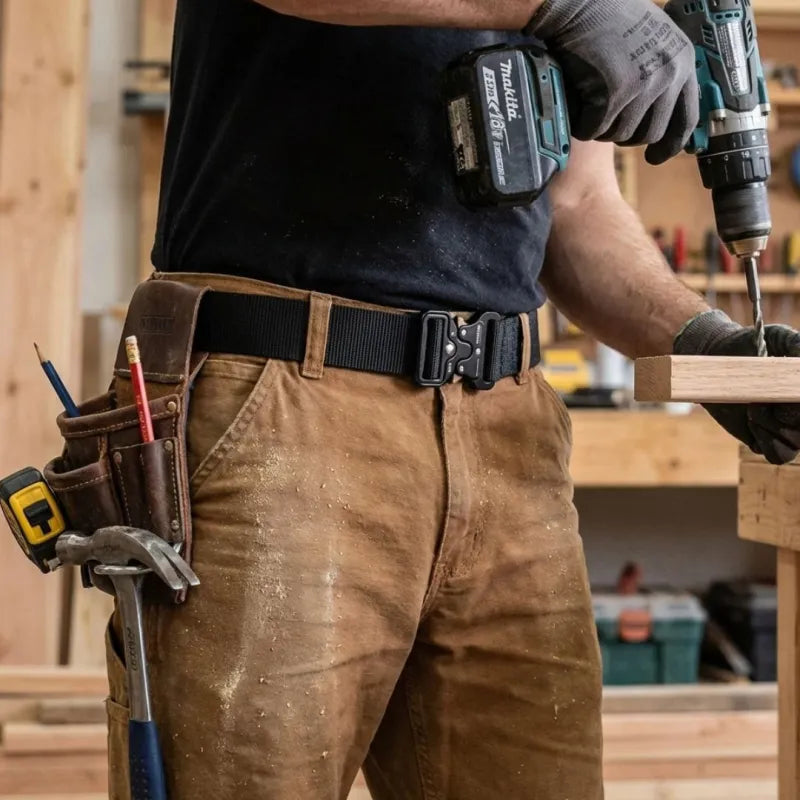
A standard fashion belt holds up pants. That's it. Add two pounds of tools and it starts to buckle, twist, and pull the waistband down.
A proper work belt for heavy tools is designed around load distribution — spreading the weight of hammers, utility knives, levels, tape measures, and whatever else you carry across a wider surface area rather than concentrating it on two inches of leather or nylon.
Three things give it away fast.
- Width. At least 1.75 inches. Two inches is better when the load is serious. Wider contact distributes pressure instead of concentrating it. Narrow belts dig in. Wide belts carry.
- Stiffness. You want a belt that holds its shape when a tool pouch pulls on it — not one that folds, twists, and repositions itself every time you crouch. Reinforced fabric or rigid-backed construction holds. Soft flexible material doesn't.
- The buckle. This one trips up more buyers than anything else, and it's worth its own section.
Check out this guide too: How to Pick the Best Work Pants: A Field-Tested Guide by Job Type
Material: Leather vs. Fabric (The Honest Answer)
The leather vs. fabric debate has been going on for decades on job sites. The honest answer is: it depends on what you're doing.
Leather is heavy, stiff when new, and softens over time to fit your body. It holds shape well under serious loads. It's not great in wet environments — prolonged moisture warps it and weakens the stitching. Leather belts tend to last longer if you take care of them, but "taking care" is real work.
Heavy-duty fabric — usually reinforced nylon or canvas — handles moisture better, weighs less, and doesn't need conditioning. Modern fabric belts with reinforced construction carry heavy tool loads without the break-in period or weather limitations of leather.
For most tradespeople and outdoor workers, a well-built fabric belt outperforms leather on practical grounds. It's lighter. It survives rain. It costs less and performs close to the same.
The one area leather still wins: environments with rough abrasion where fabric would fray. If you're dragging your belt through rubble or over sharp edges regularly, leather absorbs that abuse better.
The Buckle Question (Most People Get This Wrong)
Here's the thing about buckle choice that most buying guides skip.
On a heavy load belt, your buckle has one job: stay locked when you need it locked, and release fast when you need it off. Those two requirements point in different directions, which is why buckle design is genuinely worth thinking about.
- Traditional prong buckles are reliable but slow. They work. They don't fail. But taking your belt off ten times a shift — for breaks, for safety checks, for getting in and out of confined spaces — adds up to an annoying amount of threading and rethreading.
- Quick-release buckles are faster. One click on, one click off. The trade-off is that cheaper versions can release accidentally if the mechanism is poorly made. A quality quick-release buckle — with a double-lock mechanism or a secure clasp design — eliminates that problem. This is what Mason built into the TACTIC Pro.
For anyone whose work involves frequent on/off cycles, a quality quick-release work belt is the right answer. For workers who put the belt on at 6am and take it off at 3pm without touching it, the buckle style matters less.
Check out this guide too: How Often Should You Replace Work Boots? Signs & Expert Tips
The Two Mason Work Belts Worth Knowing
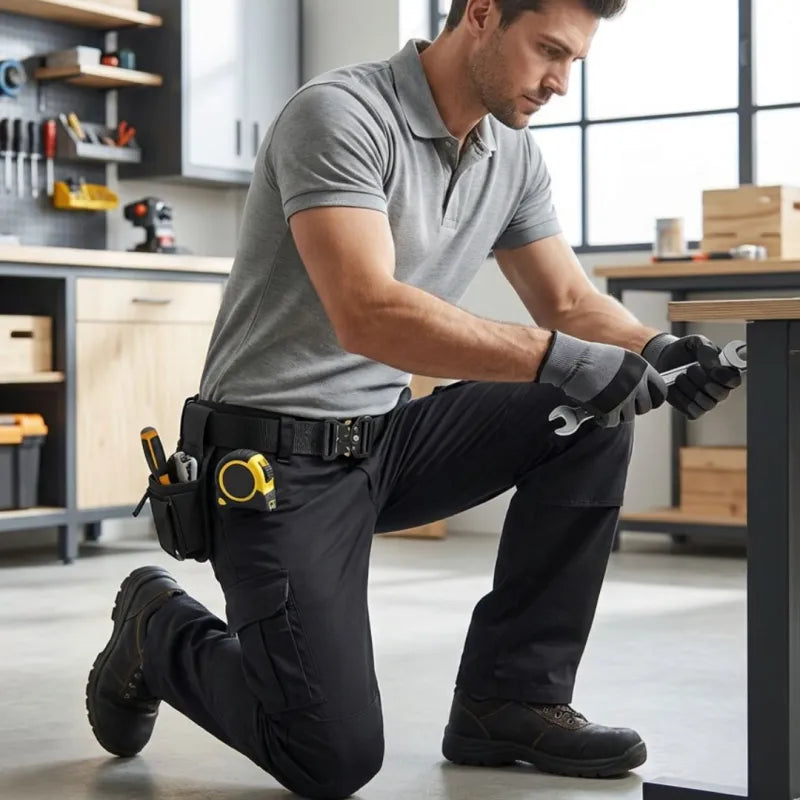
Check out our best tool belts for heavy-duty tools:
1. TACTIC Pro | Quick Release Work Belt
→ See the TACTIC Pro Work Belt
The TACTIC Pro is built for workers who need their belt to come off fast and go back on clean. The quick-release mechanism is the main feature — and it's done right. No fumbling. No threading. You'll use it every break, every time you need to swap gear, every time the site requires you to remove it for safety reasons. Over a full year of shifts, that convenience compounds.
Beyond the buckle, the TACTIC Pro is built for load. The construction handles the weight of a fully loaded tool setup without sagging or twisting out of position. It sits where you put it, even when the load shifts.
If you're choosing a work belt for heavy tools and you move a lot — climbing, crouching, getting in and out of equipment — the quick-release design is worth paying attention to. It's the kind of thing you don't appreciate until you've spent a year with a belt that doesn't have it.
- Best for: workers with frequent belt on/off cycles, contractors, site workers who need speed and reliability in the same piece of gear.
2. Adjustable Fabric Work Belt
→ See the Adjustable Fabric Work Belt
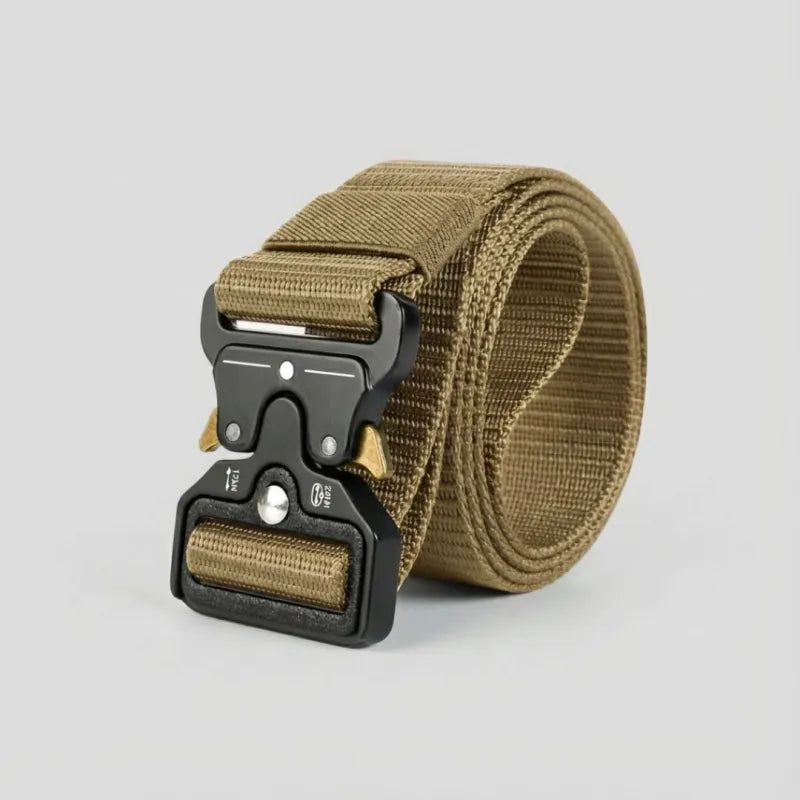
The Adjustable Fabric Work Belt is the more versatile option in the Mason lineup. The key here is fit. A work belt for heavy tools that doesn't fit correctly isn't just uncomfortable — it fails to distribute load properly, which means your lower back absorbs what the belt should be handling. Mason's adjustable design gives you a precise fit regardless of what you're wearing underneath: a thin summer shirt or a thick insulated work jacket. The sizing adapts.
The fabric construction handles moisture and daily wear without the maintenance leather requires. It's the kind of belt you put on at the start of a job and forget about — which is exactly what you want.
No frills. No fast-release mechanism. Just a solid, adjustable, well-built fabric belt that carries heavy tools through long shifts without falling apart.
- Best for: workers who prioritize fit adjustability and day-to-day reliability over quick-release speed. Good for anyone who layers up depending on season or conditions.
Check out this guide too: Work Boots vs Work Shoes: 7 Key Differences & Expert Guide
How to Choose Between the Two?
If you're still deciding, run through these questions:
Do you take your belt on and off multiple times per shift? → TACTIC Pro. The quick-release pays for itself in three days.
Do you wear different layers depending on the season and need a flexible fit? → Adjustable Fabric Belt. The waist sizing flexibility matters more than buckle speed for this use case.
Are you carrying serious tool weight — full pouches, heavy hardware? → Both handle it, but make sure you're also pairing the right work belt with compatible tool pouches to distribute load properly. A good belt with an overloaded single pouch still puts too much weight in one spot.
Budget tight? → Check the full Mason work belt collection — Mason runs warehouse sales with up to 60% off on select gear.
The Back Pain Connection (Worth Reading)
There's a reason physical therapists bring up tool belts when treating tradespeople with lower back problems.
An improperly fitted work belt for heavy tools creates asymmetric load — more weight on one hip, the body compensating by shifting posture, and then the spine absorbing stress it wasn't designed for over eight hours. Multiply that by 250 working days and you have a chronic problem that started with a $20 belt decision.
The fix isn't complicated: a properly fitted, wide enough belt that distributes load evenly and stays in position when you move. That's it. The watches, pouches, and tools are secondary. The belt is the foundation.
How to Choose a Work Belt for Heavy Tools: Final Word
Most workers choose their work belt the same way they choose their lunch — whatever's fast and available.
The ones who've been doing this a while know better. They've already worn the belt that digs in at 2pm, the buckle that won't thread after cold hands, the soft fabric that lets everything sag by noon.
Knowing how to choose the right work belt for heavy tools isn't complicated. Width, stiffness, buckle type, fit. Get those four things right and the belt disappears — which is the whole point.
