



Your legs don't care that you're sitting still. At altitude, cabin pressure drops, humidity tanks, and blood starts pooling in your lower legs faster than you'd think. Six hours in a middle seat and you land with ankles that look like you stuffed them with bread dough.
Compression socks fix that. But they're not for everyone, and slapping on the wrong pair at the wrong time can actually hurt you. Here's the straight story on who needs them, who should skip them, and how to use them right.
Key points at a glance
- Most adults flying 4+ hours benefit from compression socks, especially if they stand all day for work.
- People with circulation problems, varicose veins, or a history of blood clots need them the most.
- Diabetics, people with arterial disease, and those with nerve damage should skip them or get medical clearance first.
- Put them on before you board, take them off once you're home and done moving for the day.
- For most travelers, 15-20 mmHg is the right compression level. No prescription needed.
- A 2-hour flight is low risk for healthy people, but if your legs already swell, wear them anyway.
Why Compression Socks Work on a Plane
The Short Answer: Most People Flying Over 4 Hours Can Benefit
The research is pretty clear. Sitting still in a cramped seat for four or more hours slows blood flow in your lower legs significantly. Your calf muscles, which normally act like a pump when you walk, are doing almost nothing.
Compression socks for flying blood clots prevention isn't just marketing. A study published in the Lancet found that travelers wearing compression stockings had far fewer symptomless blood clots than those who didn't. That's not nothing.

Workers Who Spend All Day on Their Feet: Why Flying Hits Harder
If you're a nurse, a contractor, a warehouse worker, or anyone else who logs 8 to 12 hours standing or walking, your veins are already working overtime every day. The valves in those leg veins get worn down over time.
Then you sit locked in a plane seat for hours. Your legs, used to constant movement, suddenly have no help pumping blood back up. That's when swelling and discomfort hit hardest.
Compression socks give your veins the mechanical assist they'd normally get from walking. For tradespeople, nurses, and retail workers flying to a job site or back home after a shift, they're not a luxury.
Did you know?
The risk of developing a deep vein thrombosis (DVT) roughly doubles for every two hours you sit on a plane without moving. Standing up and walking the aisle every 60 to 90 minutes cuts that risk, but compression socks work even when you can't get up.
Medical Conditions That Make Compression Socks a Smart Call
Some people don't just benefit from compression socks on a plane. They genuinely need them. If you fall into one of these groups, talk to your doctor before your trip, and then actually wear the socks.
- History of DVT or pulmonary embolism: If a blood clot has already happened once, your risk goes up. Flying without compression is rolling the dice.
- Varicose veins: Those twisted, bulging veins are already under strain. Compression keeps them from getting worse mid-flight.
- Pregnancy: Blood volume increases and circulation slows down. Pregnant travelers are at significantly higher DVT risk.
- Obesity: Extra pressure on leg veins and slower overall circulation make compression a smart add.
- Recent surgery or injury: Post-op patients have elevated clot risk. Flying too soon after surgery is risky on its own; compression is one safeguard.
- Heart failure or chronic venous insufficiency: Discuss with your cardiologist, but graduated compression often helps manage fluid retention.
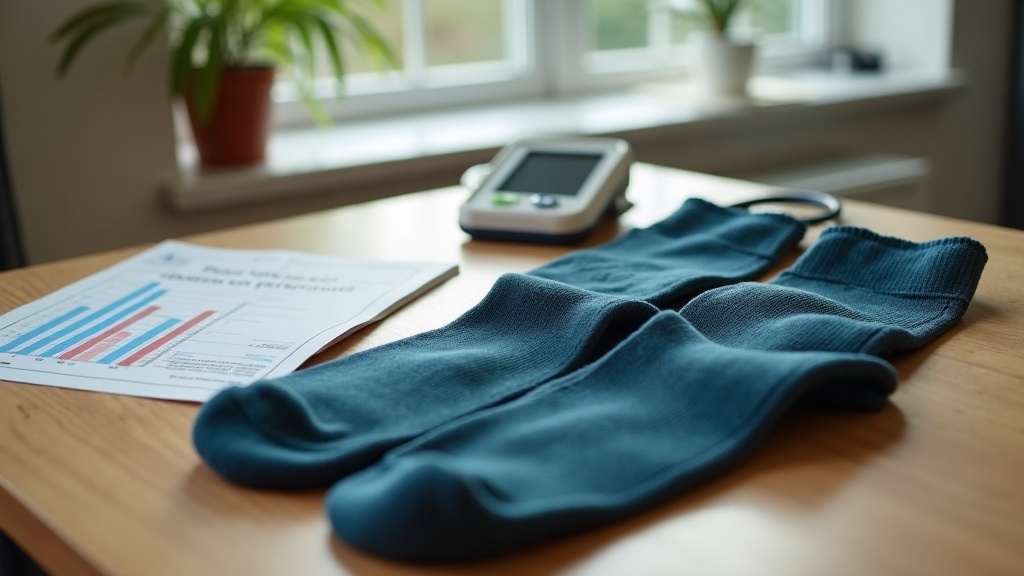
Who Should NOT Wear Compression Socks on a Plane
This is the part most articles skip because it doesn't sell socks. But it matters.
Who should not wear flight socks:
- Peripheral arterial disease (PAD): If your arteries are already narrowed and blood flow to your legs is restricted, adding external compression can cut circulation further. This is a real danger.
- Severe peripheral neuropathy: If you can't feel your feet properly, you won't notice if the socks are too tight or causing skin damage.
- Skin infections, open wounds, or gangrene on the legs: Compression over broken or infected skin can make things worse fast.
- Uncontrolled congestive heart failure: Compression can push too much fluid back into circulation and overload the heart. Your cardiologist makes the call here.
- Severe edema caused by organ failure: Same reason as above. Get medical clearance first.
If you have diabetes, proceed carefully. Many diabetics have PAD or neuropathy, so standard compression may not be safe. Low-compression travel socks (8-15 mmHg) are sometimes fine, but ask your doctor.
How to Tell If You Actually Need Them (Signs Your Legs Are Struggling)
You don't need a diagnosis to recognize when your legs are telling you something. Pay attention to these:
- Your socks leave deep imprints on your ankles at the end of a workday.
- Your feet feel heavy or achy after standing for a few hours.
- You notice visible veins that bulge or feel tender when you press them.
- You've flown before and landed with swollen feet that took a day to go down.
- You're over 50 and haven't thought about leg circulation at all. Start thinking about it.
Did you know?
Economy-class syndrome is a real medical term. It refers to DVT linked specifically to prolonged sitting in cramped airplane seats. It was first widely reported after a 28-year-old woman died from a pulmonary embolism following a long-haul flight in 2000, which pushed airlines to start taking passenger circulation seriously.
When to Put Them On and When to Take Them Off
When to put on compression socks for flying: before you leave the house. Seriously. Put them on in the morning before your feet have any chance to swell. If you wait until you're at the gate, you may already have early swelling starting and getting the socks on will be a fight.
At minimum, put them on at least 30 minutes before boarding so the compression is working when you sit down.
When to take off compression socks after flight: once you're home and done walking around. The compression is most useful while you're sedentary. If you're connecting through airports and walking a lot, you can keep them on. If you're landing and heading straight to the hotel to sleep, take them off when you get there. Don't sleep in compression socks unless a doctor told you to.
What Compression Level to Buy (mmHg Explained Without the Doctor Talk)
mmHg stands for millimeters of mercury. It's the unit used to measure how much pressure the sock applies. Higher number means more squeeze.
| Compression Level | Who It's For | Prescription Needed? |
|---|---|---|
| 8-15 mmHg | Healthy travelers, mild fatigue prevention, people on their feet all day | No |
| 15-20 mmHg | Most travelers who swell, varicose veins, pregnant women (with guidance), workers with heavy legs | No |
| 20-30 mmHg | DVT history, post-surgery, chronic venous insufficiency | Recommended to consult a doctor |
| 30-40 mmHg | Severe medical conditions, lymphedema | Yes, prescription required |
For most people reading this, 15-20 mmHg is the sweet spot. You'll find them at any pharmacy or online for $15 to $40. They work fine, and you don't need a doctor's note to buy them.
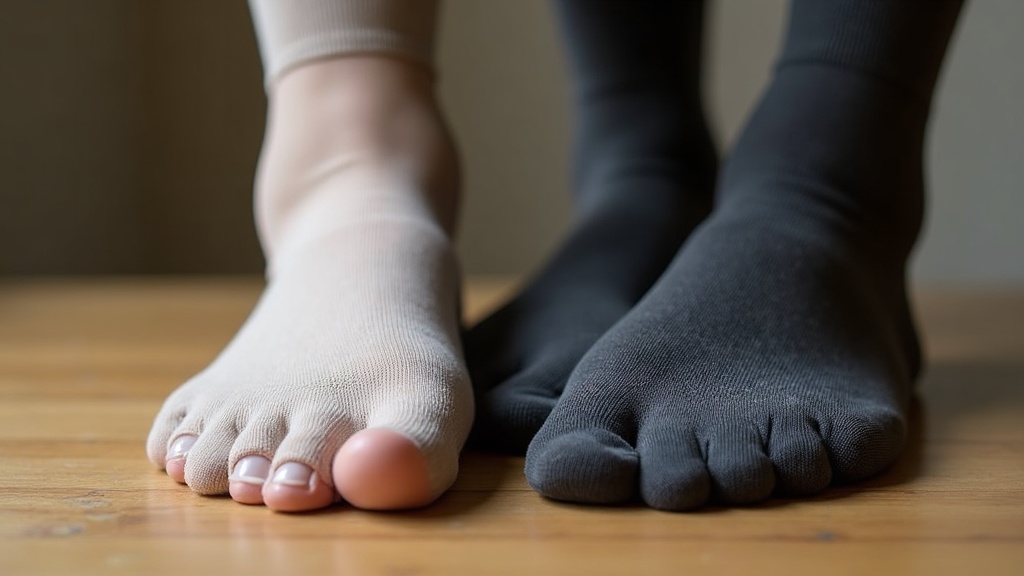
Do You Need Flight Socks for a Short 2-Hour Flight
For a healthy 30-year-old with no circulation issues? Probably not. A 2-hour flight is short enough that your body handles it fine, especially if you get up once or shift your legs around.
But here's the thing: if you already swell on short flights, if you have varicose veins, or if your legs ache after any long sit, wear them. They're not going to hurt you, and the cost is zero on a 2-hour flight versus a lot of discomfort when you land.
The real threshold where compression socks move from "nice to have" to "actually important" is around the 4-hour mark for low-risk people, and 2 hours for high-risk groups.
Side Effects Worth Knowing Before You Buy
Compression socks are safe for most people, but there are some legitimate side effects of wearing compression stockings you should know about.
- Skin irritation or itching: Usually from the elastic or synthetic materials. Try a cotton-blend option.
- Indentation marks: Normal if mild. If the marks are deep or take hours to fade, the socks may be too tight or the wrong size.
- Numbness or tingling: If this happens, the compression is cutting off circulation. Take them off immediately and size up or switch brands.
- Overheating: Compression socks trap more heat than regular socks. Moisture-wicking fabric helps.
The Practical Move Before Your Next Flight
Buy a pair of 15-20 mmHg compression socks. Put them on the morning of your flight. Walk the aisle every hour on flights over 4 hours. Drink water, not just coffee. Take the socks off when you're done for the day.
That's it. No complicated protocol. If you have any of the medical conditions mentioned above, have a 10-minute conversation with your doctor before you fly. They'll tell you exactly what level you need and whether there's anything else to watch for.
Your legs do hard work every day. Give them a fair shot on the flight too.
Be sure to check out our articles:
Do I Need Compression Socks for Flying Pregnant? Yes. Here's Why
Who Should Not Wear Flight Socks: Know Before You Fly
Boot Socks for Guys: What Actually Holds Up on the Job
Where to Buy Compression Socks for Flying (And What to Get)
